Warm Farro Bowl with Roasted Vegetables & Poached Egg
Nutty, chewy farro, sweet roasted vegetables, and a soft egg yolk that becomes the sauce. A grown-up grain bowl built for chilly evenings.
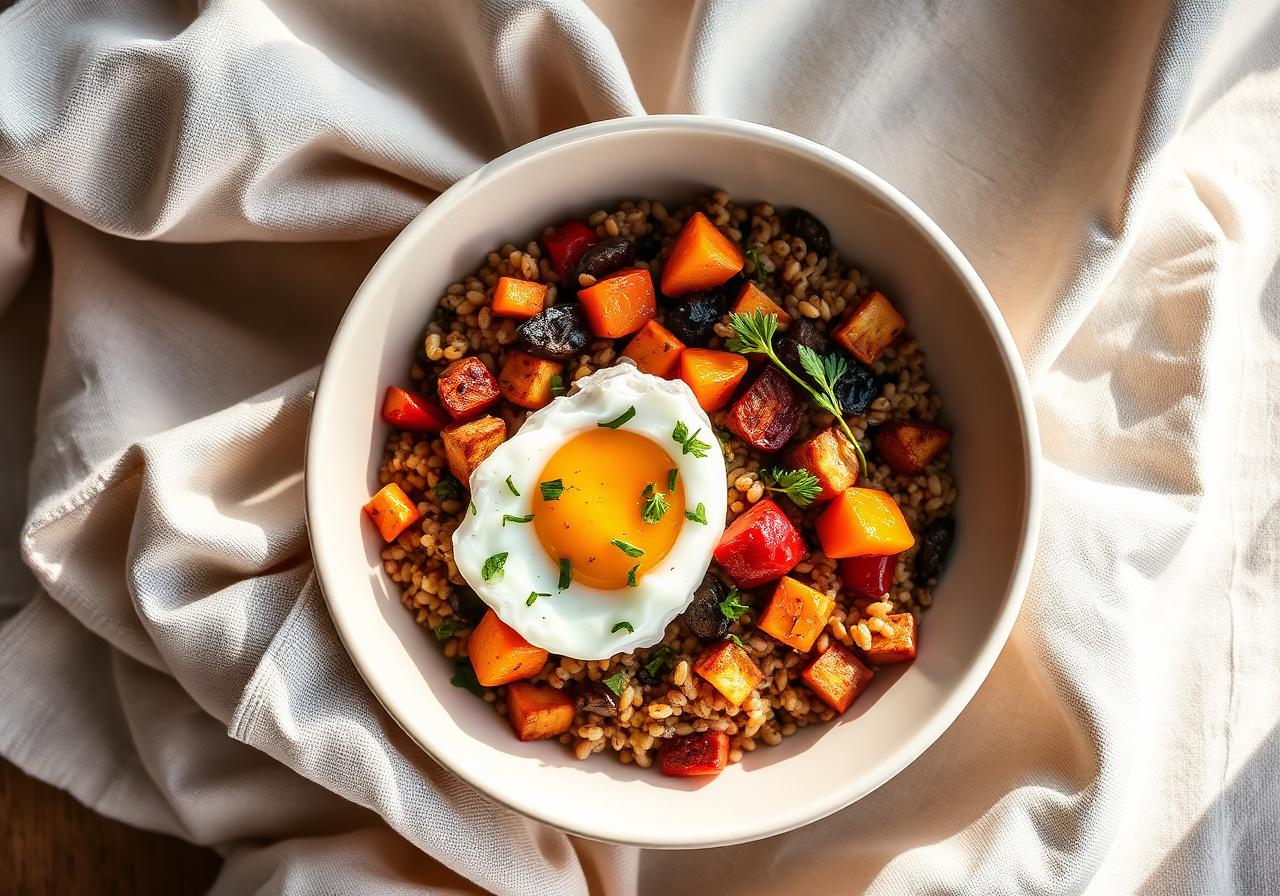
Cold-weather grain bowls deserve their own category. Where summer bowls lean on raw vegetables and bright dressings, this one leans on caramelized roots, chewy ancient grain, and the runny yolk of a poached egg that doubles as a sauce.
Farro is the underrated grain in question. Nuttier than rice, faster than barley, and substantial enough to feel like a meal on its own. Pair it with whatever you have to roast and you've got a versatile dinner template.
Ingredients
- 1 cup pearled or semi-pearled farro
- 3 cups water or broth
- 1 large sweet potato, cut in 1-inch cubes
- 1 red bell pepper, sliced
- 1 small red onion, cut in wedges
- 3 tbsp olive oil
- 1 tsp smoked paprika, ½ tsp cumin
- 2 cups baby kale or arugula
- 2 large eggs
- 1 tbsp white vinegar (for poaching)
- Dressing: 2 tbsp olive oil, 1 tbsp lemon juice, 1 tsp Dijon, salt and pepper
- Fresh parsley, to finish
Instructions
- 1
Heat oven to 425°F. Toss vegetables with 2 tbsp olive oil, smoked paprika, cumin, and salt. Roast 25–30 minutes, stirring once, until caramelized.
- 2
Meanwhile, simmer farro in salted water for 20–25 minutes (pearled) or 30–35 minutes (semi-pearled) until tender with a slight chew. Drain and toss with remaining olive oil.
- 3
Whisk dressing ingredients in a small bowl.
- 4
Bring a wide pot of water to a bare simmer. Add vinegar. Crack each egg into a small bowl, then slide into the water. Poach 3 minutes for a runny yolk.
- 5
Build bowls: farro, greens, roasted vegetables, poached egg on top. Drizzle with dressing, scatter parsley, and break into the yolk at the table.
Pearled, semi-pearled, or whole farro?
Pearled farro has had the bran removed, cooks in 20 minutes, and produces a softer grain. Semi-pearled keeps some bran for more fiber and a chewier bite — our preference. Whole farro takes nearly an hour and an overnight soak; lovely if you have the time, fine to skip if you don't.
Always rinse farro before cooking to remove surface starch and dust. The cooking water should look mostly clear, not cloudy.
How to poach an egg without panic
The two rules: use a fresh egg (older eggs spread into wisps) and keep the water at a bare simmer, not a boil. The vinegar helps the whites set faster but isn't strictly required.
Crack the egg into a small bowl first, then slide it close to the water surface. Three minutes gives a runny yolk; four minutes is jammy; five is fully set. Lift with a slotted spoon and rest briefly on a paper towel before plating.
Vegetables that work in this bowl
Roasted: carrots, parsnips, butternut squash, cauliflower, brussels sprouts, fennel, beets. Quick-cooked: sautéed mushrooms, blistered tomatoes, charred broccoli. The principle is one sweet vegetable, one savory, and something with a little char.
Avoid watery vegetables (zucchini, bell peppers in large quantities) as a primary component — they'll loosen the bowl and dull the flavors.
Most of this prep can happen ahead
Cook farro in a large batch on Sunday and store up to 5 days. Roast vegetables ahead and reheat. Make dressing in a jar. The poached egg is the only thing you need to do at the last minute, and it takes three minutes.
For a vegan version, skip the egg and add a generous spoon of hummus or tahini drizzle for richness.
Frequently asked questions
Is farro gluten-free?
No. Farro is an ancient form of wheat. For a gluten-free version, substitute brown rice, quinoa, or millet.
Can I use a different grain?
Yes — wheat berries, barley, or freekeh all work with adjusted cooking times. Even brown rice will do in a pinch.
How do I store leftovers?
Components separately, refrigerated, for up to 4 days. Re-poach a fresh egg when serving.