Heirloom Tomato & Burrata Salad: A Three-Ingredient Showpiece
Peak-summer tomatoes, a torn ball of burrata, and good olive oil. The recipe that proves the best dishes are the simplest.
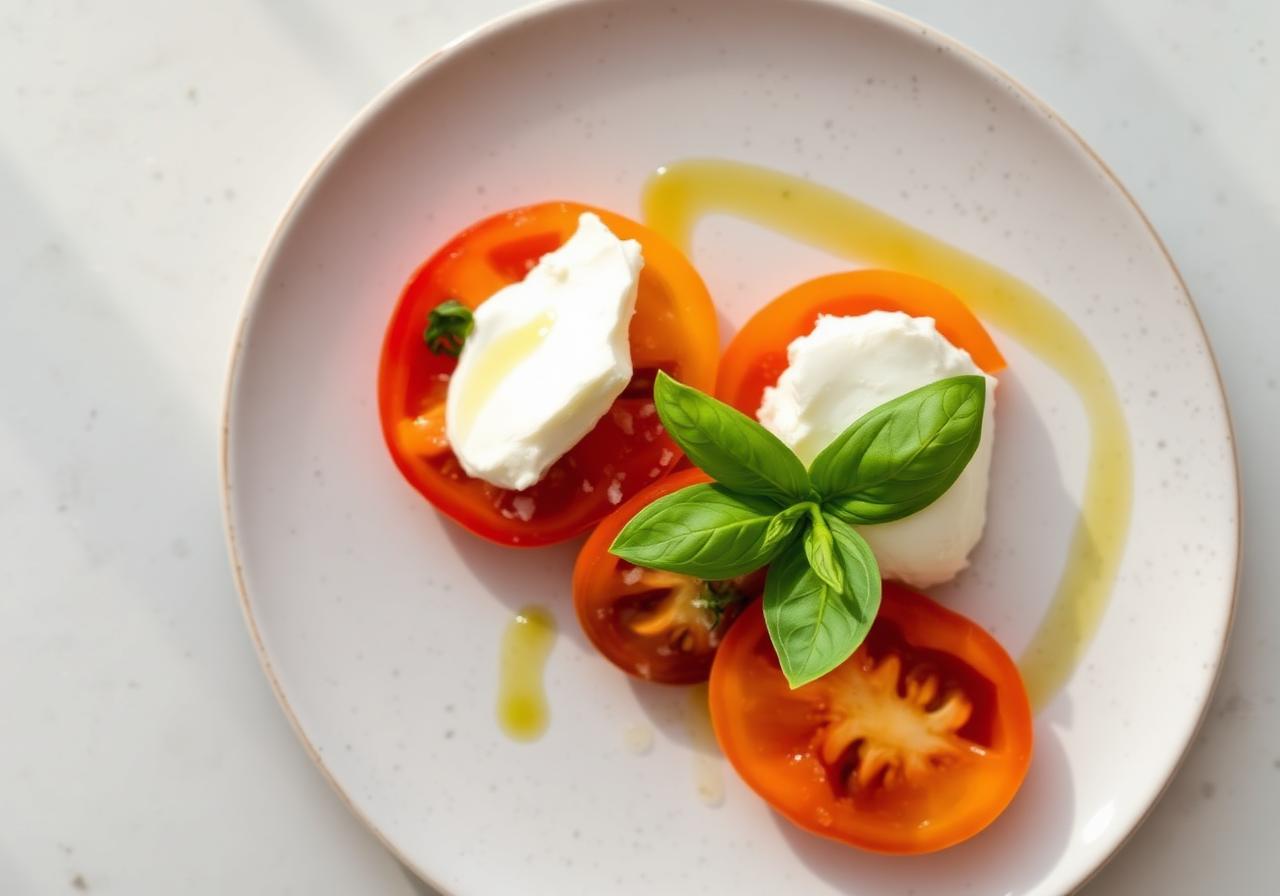
There's no recipe here, really, only a method and an insistence on quality. A great heirloom tomato salad is what summer tastes like, and it's a dish where the ingredients have nowhere to hide. Pale grocery tomatoes won't work. A flavorless olive oil won't work. Pre-shredded mozzarella absolutely won't work.
When you have the right components, the assembly takes five minutes and the result is what people serve at twenty-eight dollars a plate. The point is to do almost nothing and let the ingredients sing.
Ingredients
- 1 lb mixed heirloom tomatoes (3–4 medium), at room temperature
- 1 ball (8 oz) fresh burrata
- 3 tbsp best-quality extra-virgin olive oil
- Flaky sea salt (Maldon or similar)
- Freshly cracked black pepper
- Small handful of fresh basil leaves, torn
- Optional: aged balsamic vinegar, to drizzle
- Crusty bread, to serve
Instructions
- 1
Take tomatoes out of the fridge an hour before serving (or, ideally, never refrigerate them at all). Cold tomatoes taste flat.
- 2
Slice tomatoes into rounds or wedges in mixed sizes. Arrange on a large platter, slightly overlapping.
- 3
Tear the burrata gently into pieces over the tomatoes, letting the creamy interior fall naturally. Do not slice — texture is the point.
- 4
Drizzle generously with olive oil, scatter torn basil, and finish with flaky salt and cracked pepper. Serve immediately with bread.
How to choose a tomato that's worth eating
Smell the stem end. A great tomato is unmistakably fragrant — sweet, grassy, slightly funky. No smell, no flavor.
Look for heaviness for size, taut skin without bruises, and varieties with character — Cherokee Purple, Brandywine, Green Zebra, Striped German. Mix shapes and colors for visual contrast and flavor variety.
Never refrigerate them. Cold destroys both texture and aromatics. A tomato that's spent a day in the fridge cannot be brought back.
What burrata is, and how to handle it
Burrata is fresh mozzarella stretched into a pouch and filled with stracciatella — soft cheese curds in cream. The outside is firm; the inside oozes when broken. That's the whole point.
Bring it to room temperature before serving (about 30 minutes out of the fridge). Cold burrata is rubbery; room-temp burrata is silky.
Tear it by hand. Slicing produces clean, lifeless edges; tearing produces rustic shapes that catch oil and flavor.
This is the dish that justifies the expensive olive oil
You'll taste the oil directly. A grassy, peppery Tuscan oil or a buttery Ligurian one will both shine. A flat, generic supermarket oil will not. If you only own one bottle of finishing oil, use it here.
A good test: a great olive oil should make the back of your throat tingle slightly. That's the polyphenols — the same compounds that signal freshness.
Frequently asked questions
Can I use cherry tomatoes?
Yes, halved, when heirlooms aren't available. The flavor will be a notch less complex but still excellent.
What if I can't find burrata?
Substitute fresh buffalo mozzarella, torn the same way. Different texture but similar effect — soft, milky, mild.
Should I add balsamic?
Optional. A few drops of properly aged balsamic (12 years or more) can be lovely; cheap balsamic vinegar will dominate everything. When in doubt, skip it.